
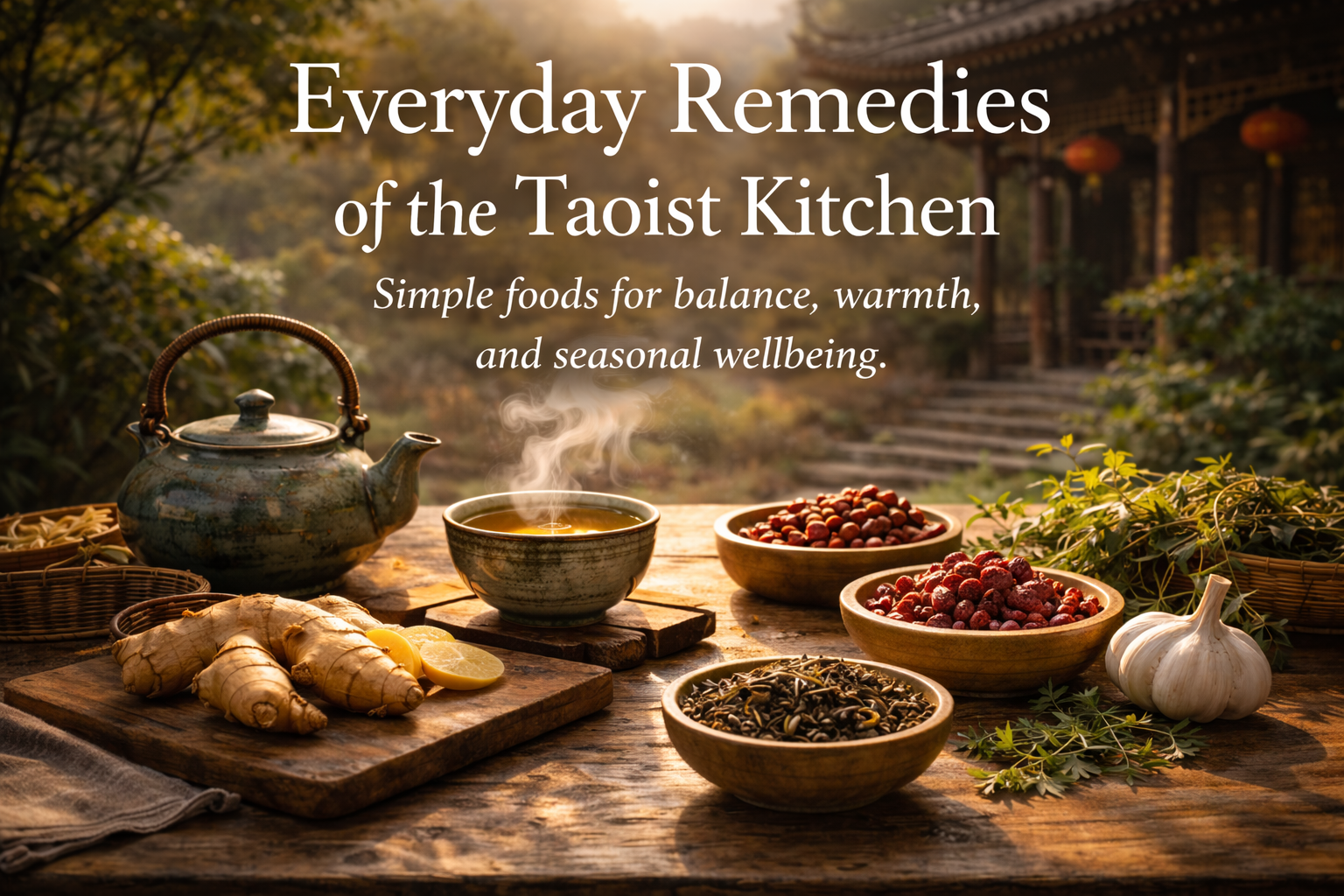
Five Everyday Remedies of the Taoist KitchenSimple foods used for balance, warmth, and everyday wellbeing
In traditional Chinese households, the kitchen has long been a place not only for cooking but for quiet care. Simple ingredients kept on hand — ginger, tea leaves, pears, herbs, and grains — are often prepared in small ways to support balance in daily life.
These remedies are not dramatic cures or complicated formulas. Instead they reflect a philosophy shared by Taoist thought and traditional Chinese food culture: that health is often maintained through small, steady practices rather than extreme interventions.
Many of these ingredients are already part of everyday meals. When prepared thoughtfully, they become gentle supports for digestion, warmth, cooling, and seasonal balance.
Ginger Tea
Warming the body
Few ingredients are as widely used in Chinese kitchens as fresh ginger. Known for its warming qualities, ginger is often used during colder months or when someone feels chilled.
A simple ginger tea is one of the most familiar household preparations.
Preparation
Thin slices of fresh ginger are simmered in hot water for several minutes, sometimes with a small amount of honey or jujube dates. The tea is served warm and is especially comforting during cold weather.
Its warmth and gentle spice make it one of the most recognizable remedies in everyday cooking.
Green Tea
Cooling and refreshing
Green tea has been consumed in China for thousands of years and remains one of the most common daily drinks.
In traditional food culture it is often associated with cooling and cleansing qualities, making it especially welcome during warm weather or after heavier meals.
A cup of green tea offers a simple moment of balance — refreshing the body while encouraging calm attentiveness.
Pear Soup
Restoring moisture
As the air becomes dry in autumn, pears are often used in soups and desserts that restore moisture to the body.
Pear soup is a gentle dish made by simmering sliced pears with water, sometimes with jujube dates or a small amount of ginger.
The result is lightly sweet and soothing, reflecting the quieter rhythm of autumn cooking.
Chrysanthemum Tea
Cooling excess heat
Chrysanthemum flowers are commonly brewed into a delicate herbal tea that has long been appreciated for its cooling properties.
The flowers are steeped in hot water until the tea turns pale golden. Sometimes a few goji berries are added for mild sweetness.
During the heat of summer, this tea is valued for its refreshing and calming qualities.
Congee
Gentle nourishment
Rice congee — a simple rice porridge — is one of the most traditional comfort foods in Chinese culture.
Cooked slowly with plenty of water, rice becomes soft and easily digestible. The dish can be prepared plain or with small additions such as ginger, scallions, vegetables, or herbs.
Because it is light yet nourishing, congee is often eaten when the body needs gentle support.
The Philosophy Behind Everyday Remedies
What unites these simple foods is not complexity but balance.
Rather than strong medicines or dramatic treatments, traditional Chinese households often rely on everyday ingredients that support the body gradually. Warm foods appear during cold weather, cooling drinks during summer heat, and moistening foods during dry autumn months.
In this way the kitchen becomes a place where philosophy and daily life quietly meet.
A cup of tea, a bowl of soup, or a pot of congee may seem simple, yet each reflects a deeper principle found throughout Taoist thought: that harmony with the natural world begins with small, attentive actions.