Essential Ingredients of the Taoist Pantry
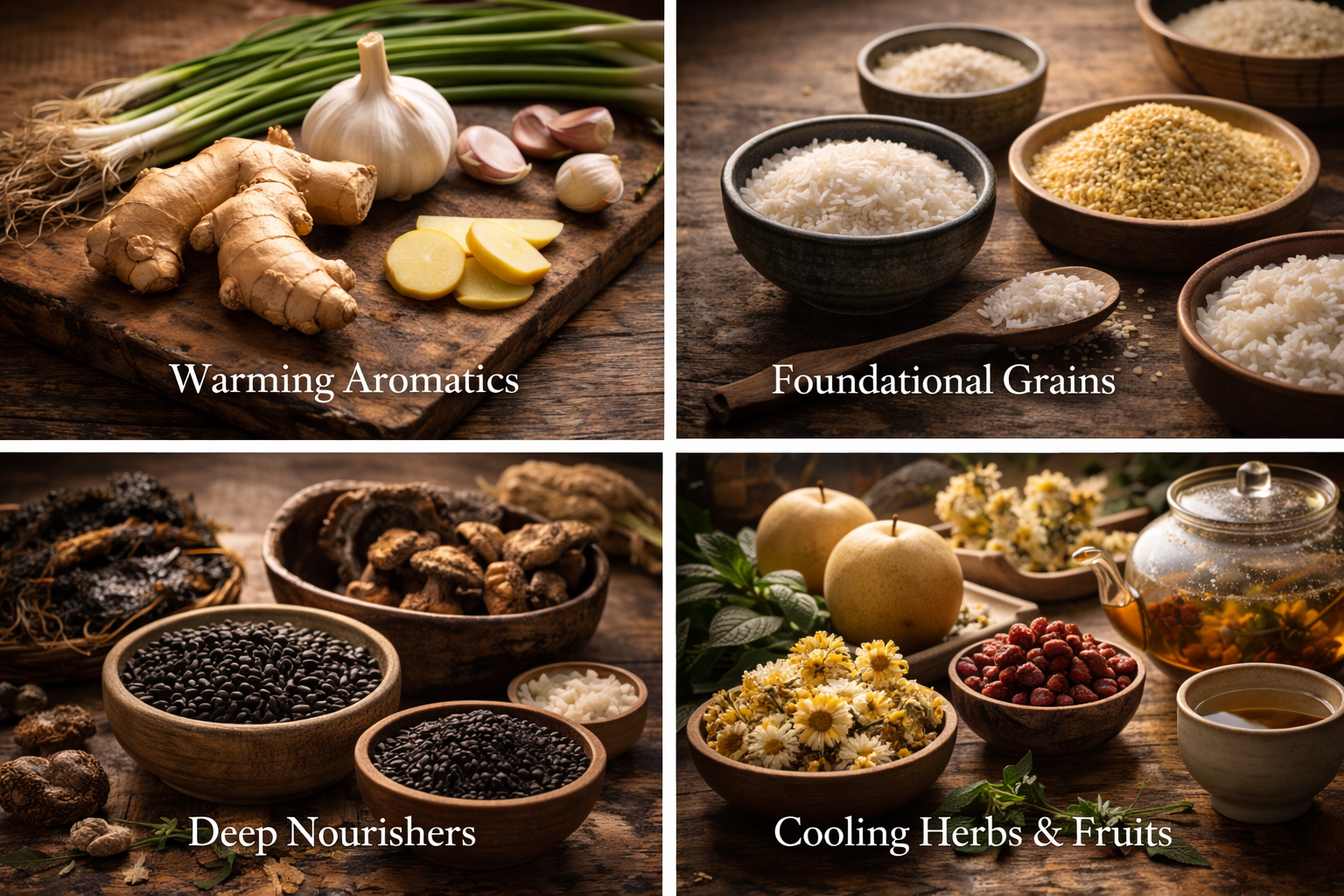
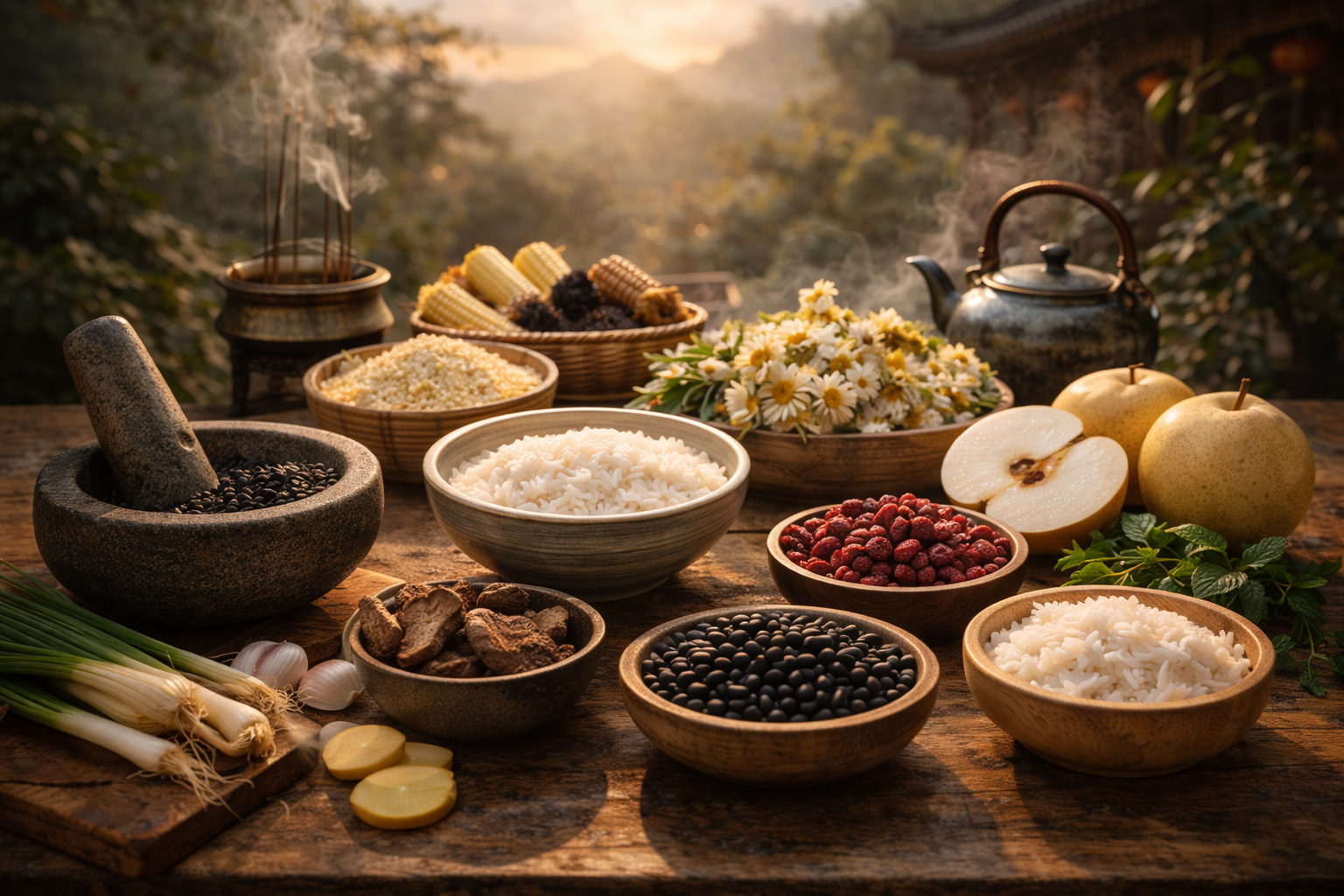
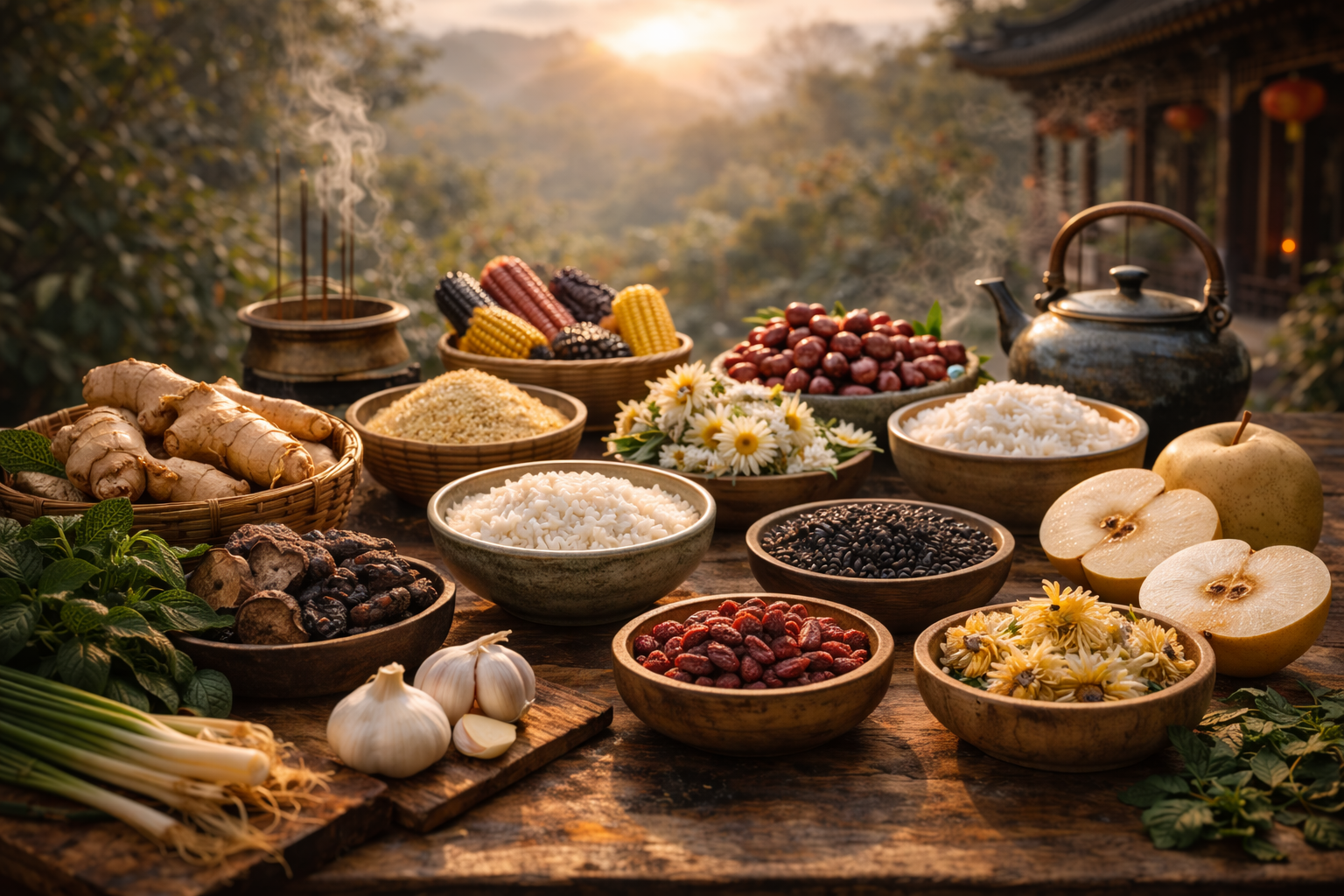
These ingredients appear again and again in traditional Chinese kitchens. They represent the balance of warming and cooling foods, nourishment and simplicity, and the subtle connection between food and medicine that has long shaped Taoist culinary traditions.
Ginger
A cornerstone of Chinese cooking, fresh ginger is valued for its warming qualities and ability to stimulate digestion and circulation. It appears in soups, broths, teas, and stir-fried dishes, especially during colder seasons.
Garlic
Garlic brings both depth of flavor and gentle warmth to a dish. It has long been associated with strengthening the body and supporting the immune system.
Scallions
Often used alongside ginger and garlic, scallions provide brightness and fragrance. They are one of the most common finishing ingredients in Chinese cuisine.
Rice
Rice is the quiet foundation of countless meals. Its mild flavor and grounding quality make it a stabilizing food that pairs easily with vegetables, soups, and herbs.Millet
One of the oldest cultivated grains in China, millet is light, nourishing, and often used in porridges that support digestion.
Black Beans
Black beans are considered deeply nourishing in traditional Chinese food culture. They are frequently used in soups and stews that support strength and vitality.
Mushrooms
Shiitake and other mushrooms bring rich umami flavor while also contributing minerals and nutrients. They appear often in broths and vegetable dishes.
Seaweed
Sea vegetables such as kelp provide natural minerals and are commonly used in soups and broths.
Goji Berries
These small red berries are widely used in Chinese cooking and herbal teas. They add mild sweetness and are traditionally associated with vitality and longevity.
Jujube Dates
Jujube dates provide gentle sweetness and are often simmered in soups or teas. They are commonly used to balance stronger herbal ingredients.
Chrysanthemum
Often brewed as a tea, chrysanthemum flowers are valued for their cooling and calming qualities, particularly during warmer months.
Pears
Pears are especially valued in autumn cooking. They are often used in soups or light desserts to restore moisture during dry seasons.
The Foundation of the Taoist Kitchen
Together these ingredients form the quiet foundation of the Taoist pantry — simple foods that allow the kitchen to respond naturally to the changing rhythms of the seasons.